


Individuals
Chip in to the crowdfunding
The journey to Lapland, the gear, the food, what we need to create in the cold. Every gift helps us bring back the beauty of the living world and share it, and we'll tell you everything along the way.
The expedition · Sarek, Swedish Lapland
At the end of winter, we will set off on skis, pulling pulkas, self-sufficient, into the heart of Sarek National Park. About nine days: maybe eight, maybe ten, depending on the snow and the weather. The goal: reach the foot of Nammásj. The land will decide the rest.
Moufid knows the area. He has planned the route, he will make the weather calls, and the group’s safety will always come before the mountain.
Map © OpenTopoMap (CC BY-SA) · Data © OSM, SRTM
The route is a starting point: the real path will be decided on the ground.
Before we leave and once we’re back, we tell it all on Instagram. Follow @moufid_taleb
The route
A loop into the heart of the Sarek: up onto the plateau, across to the big frozen lakes, out and back to the foot of Nammásj, then down towards Kvikkjokk.
A route, not a schedule
This route is an approximation that gives us a starting point. On the ground, the terrain, the conditions and our own choices may change it.
The land
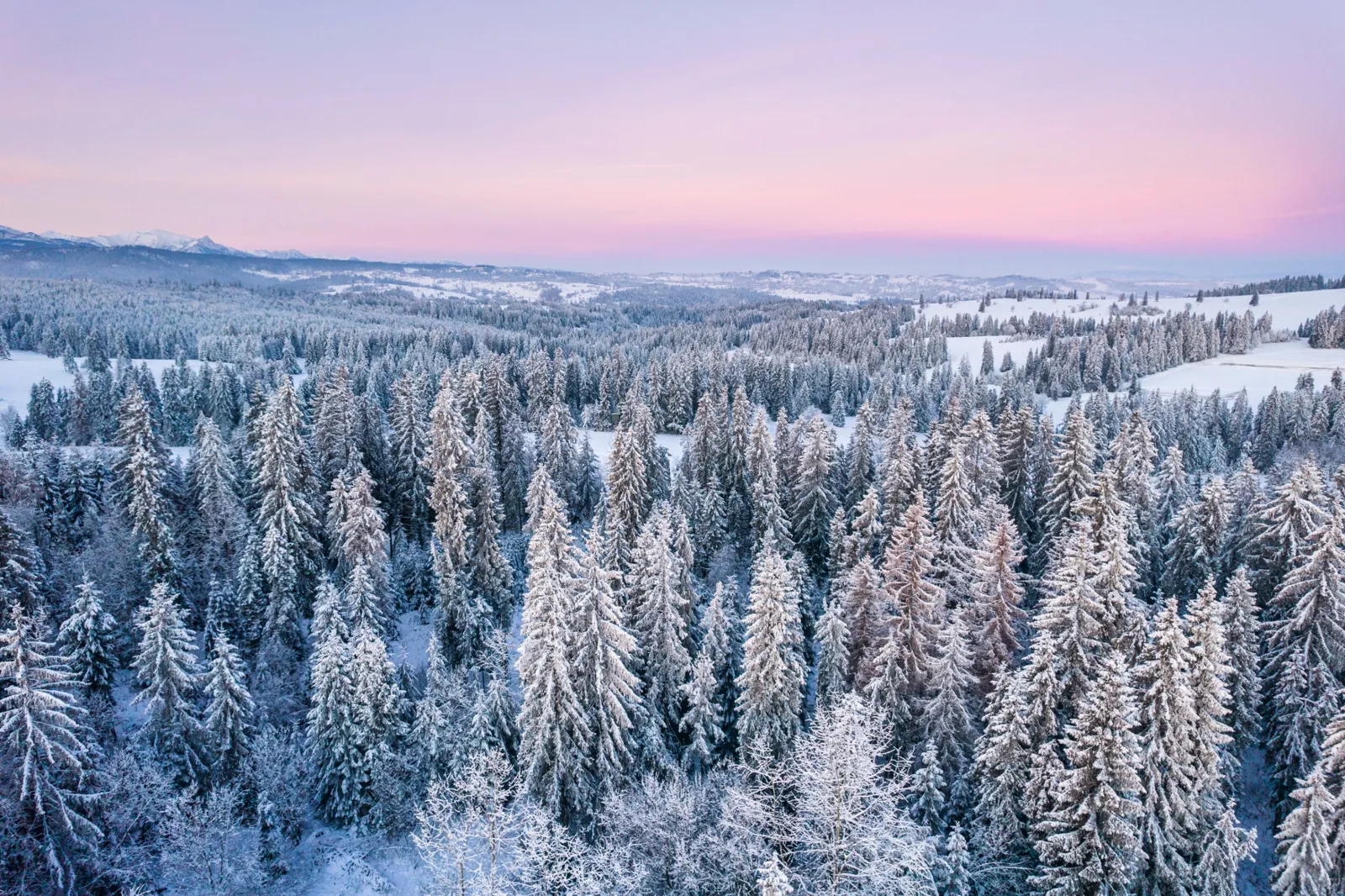
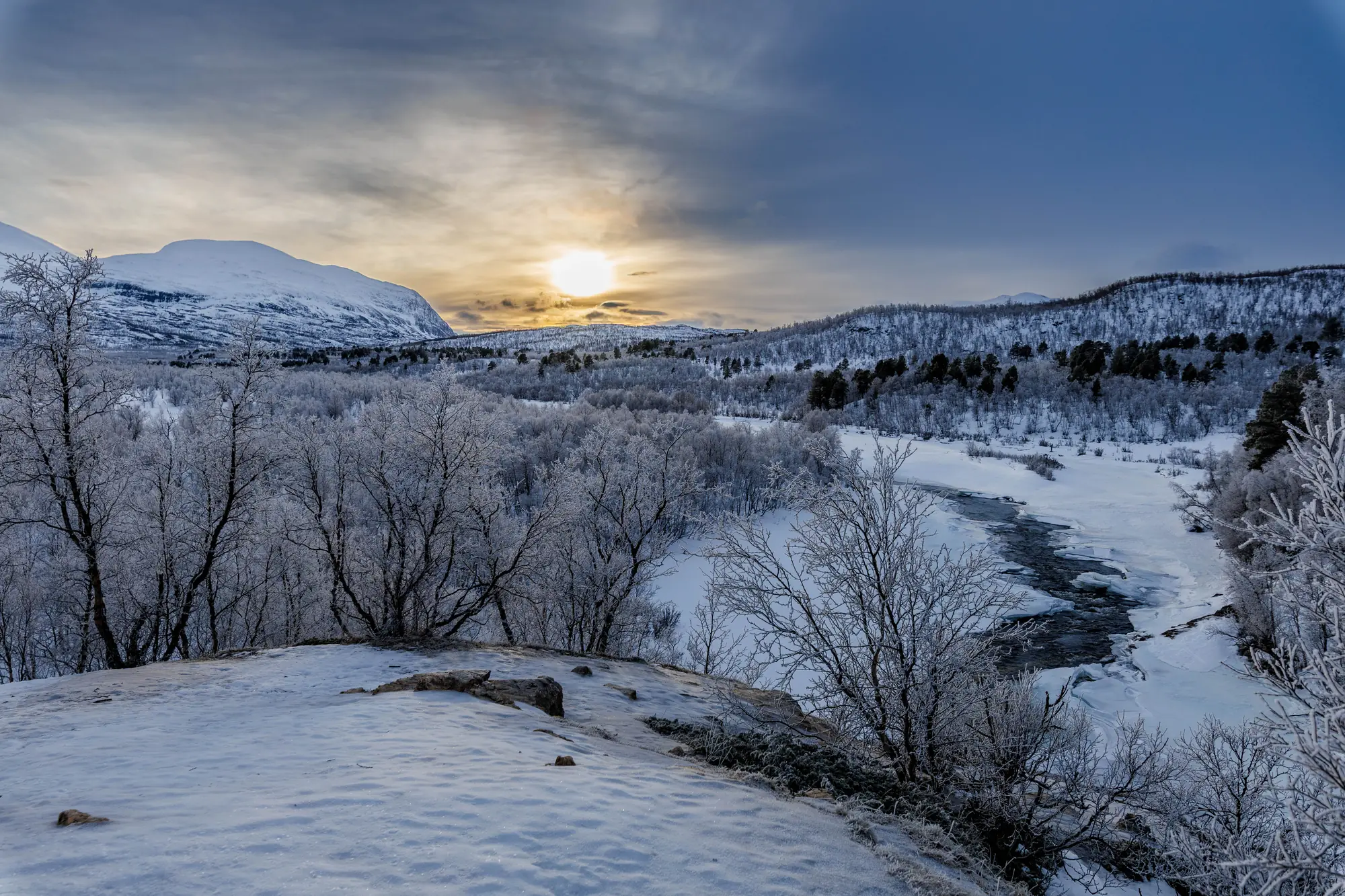
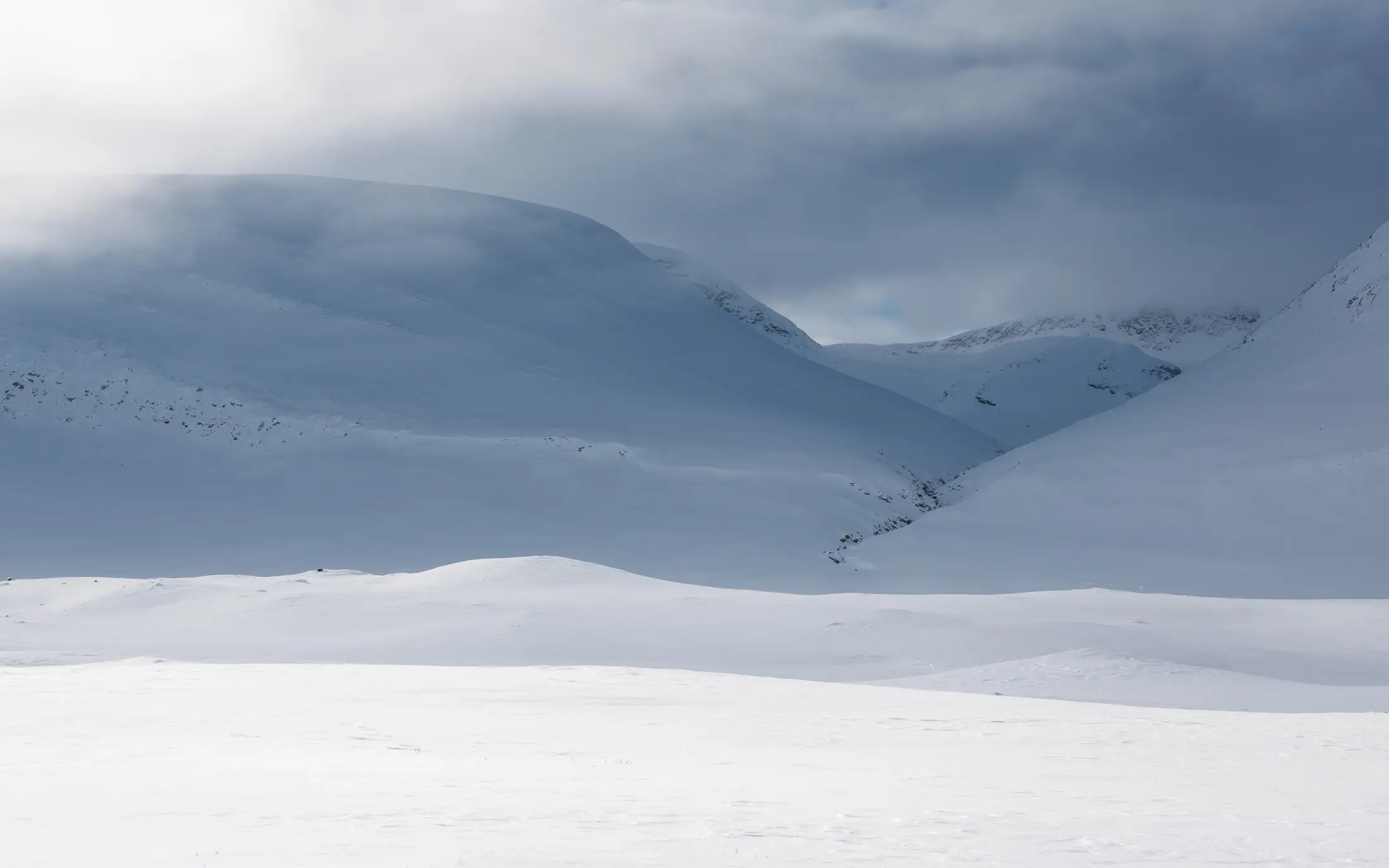
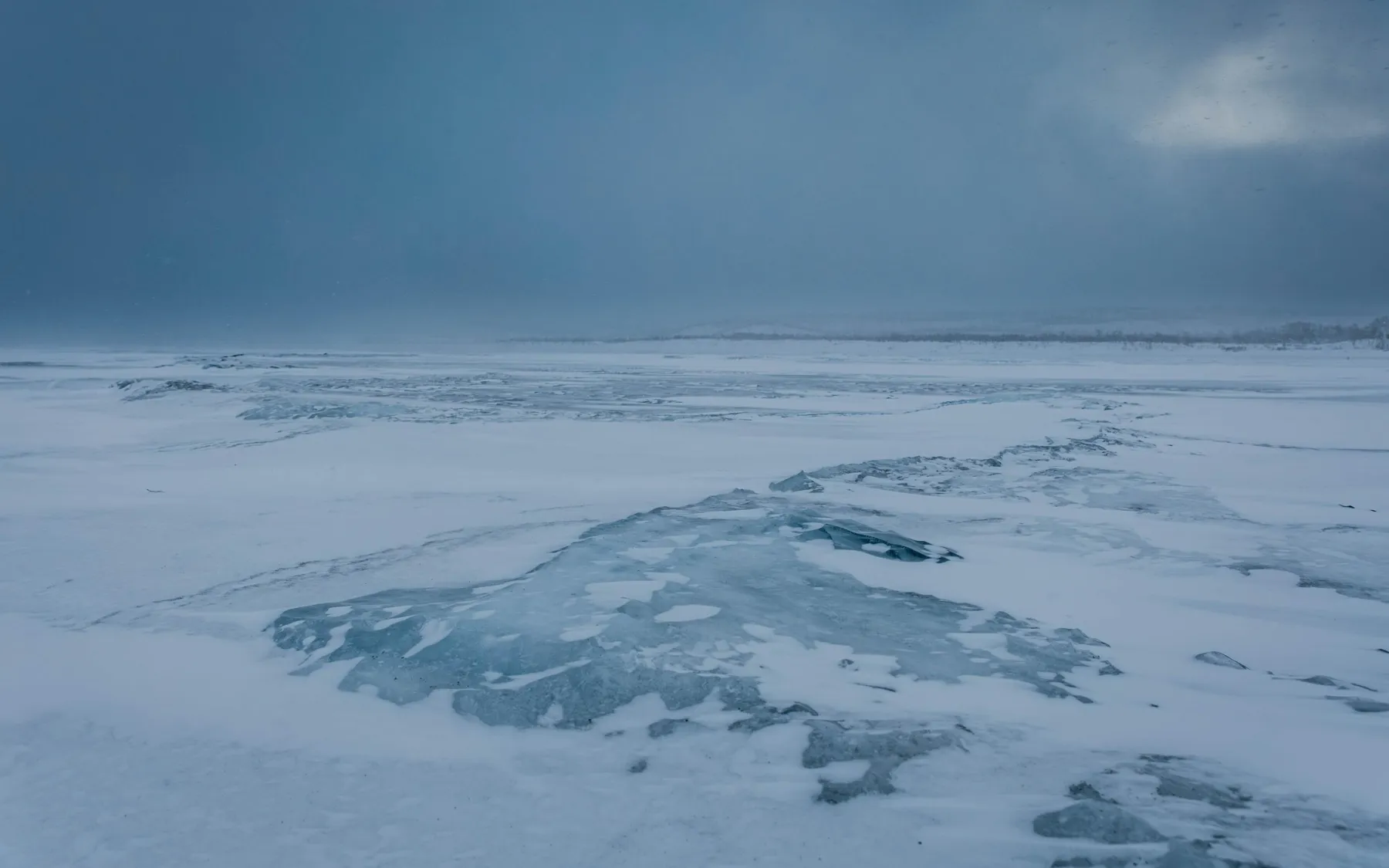
From wooded valleys to windswept plateaus, the landscape never stops changing.
A land that is lived in
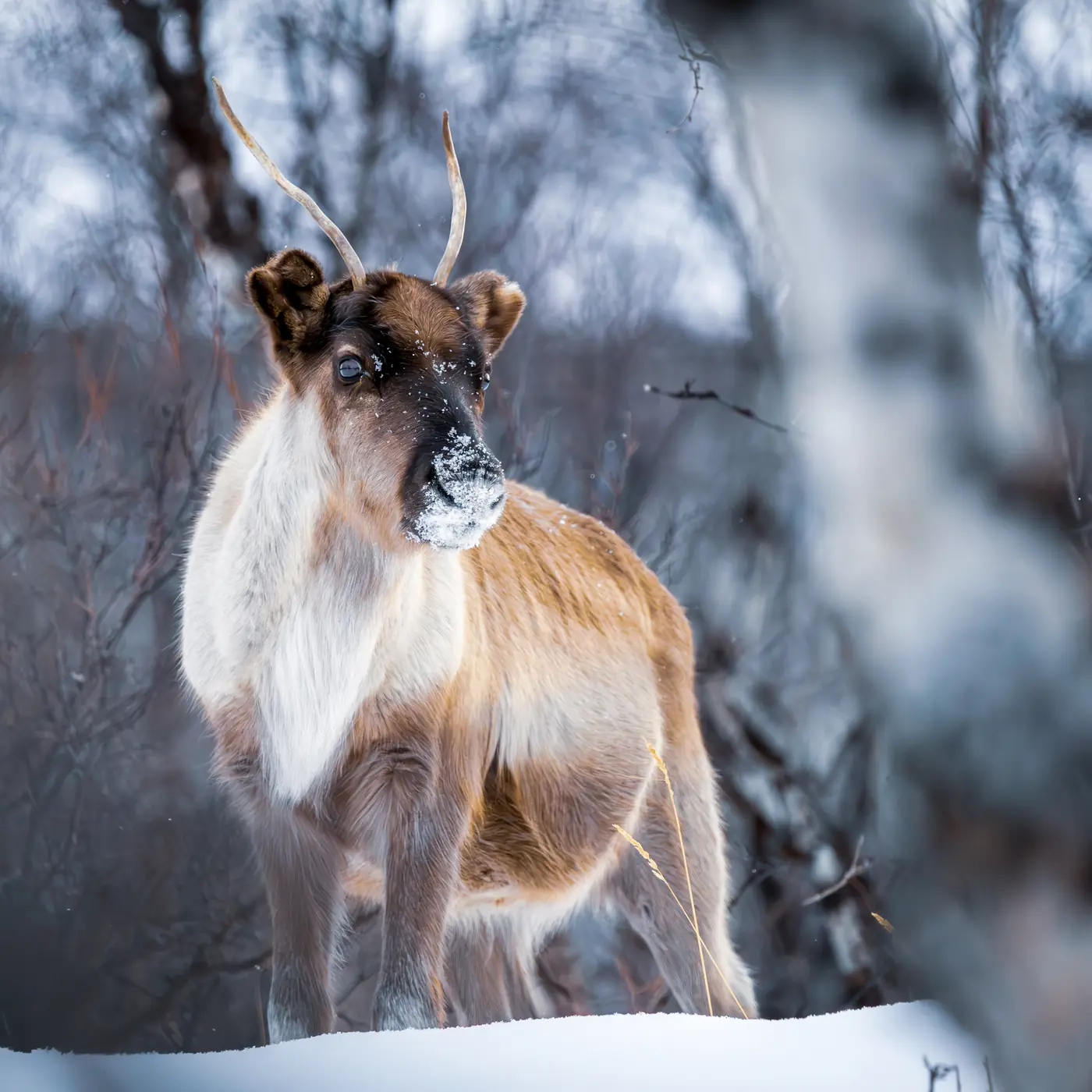
The Sarek is not a wilderness without people. It is the land of the Sámi, the Indigenous people of Lapland, who move their reindeer through it with the seasons.
In summer, the herds go up into the mountains. In winter, they come down further east, into the taiga. At the end of winter, the herders get ready to head back to the summer pastures.
Along the way, we will pass their summer dwellings, completely empty in winter, waiting for the herds to return. We will pass by without disturbing anything.
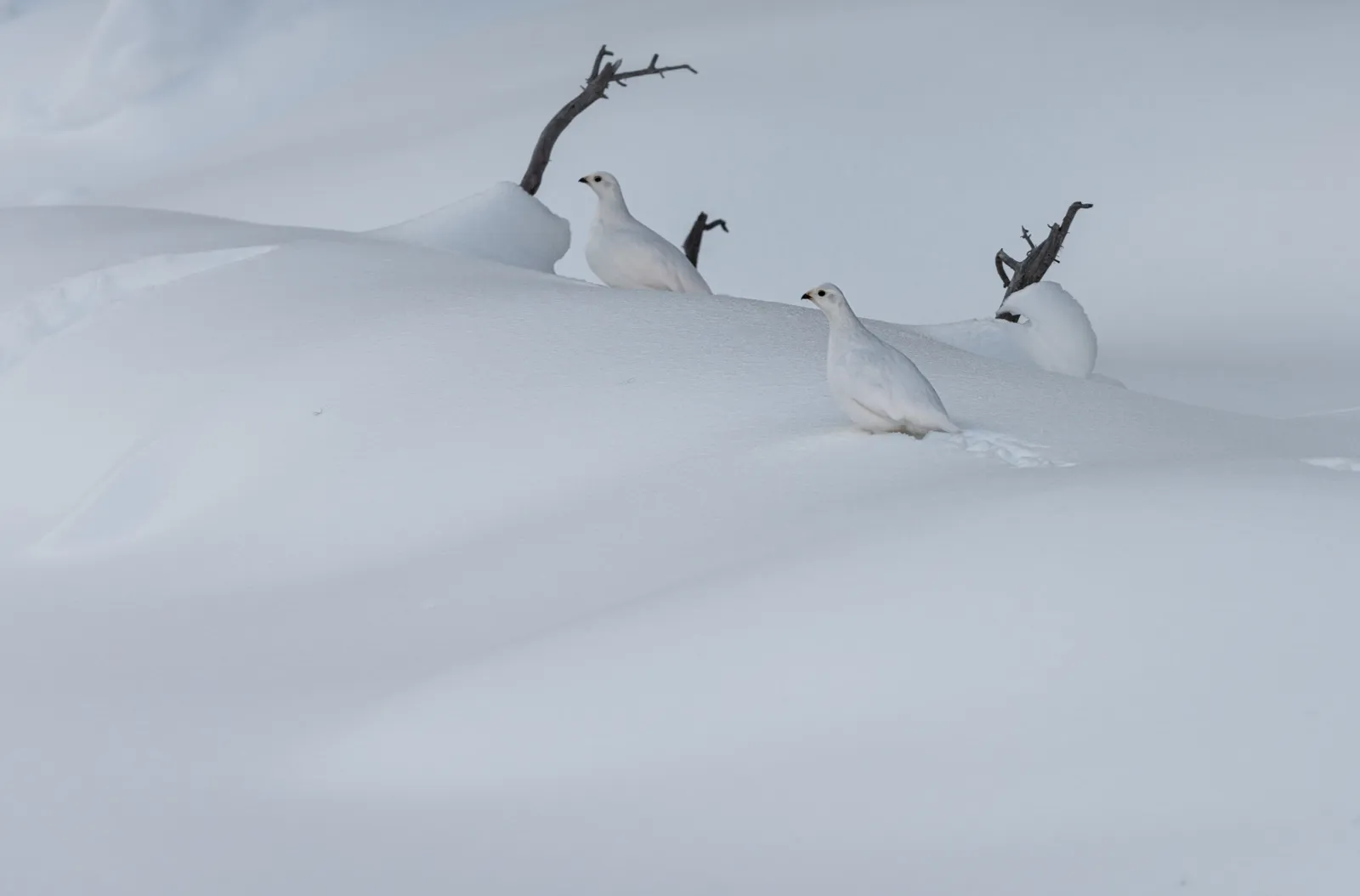
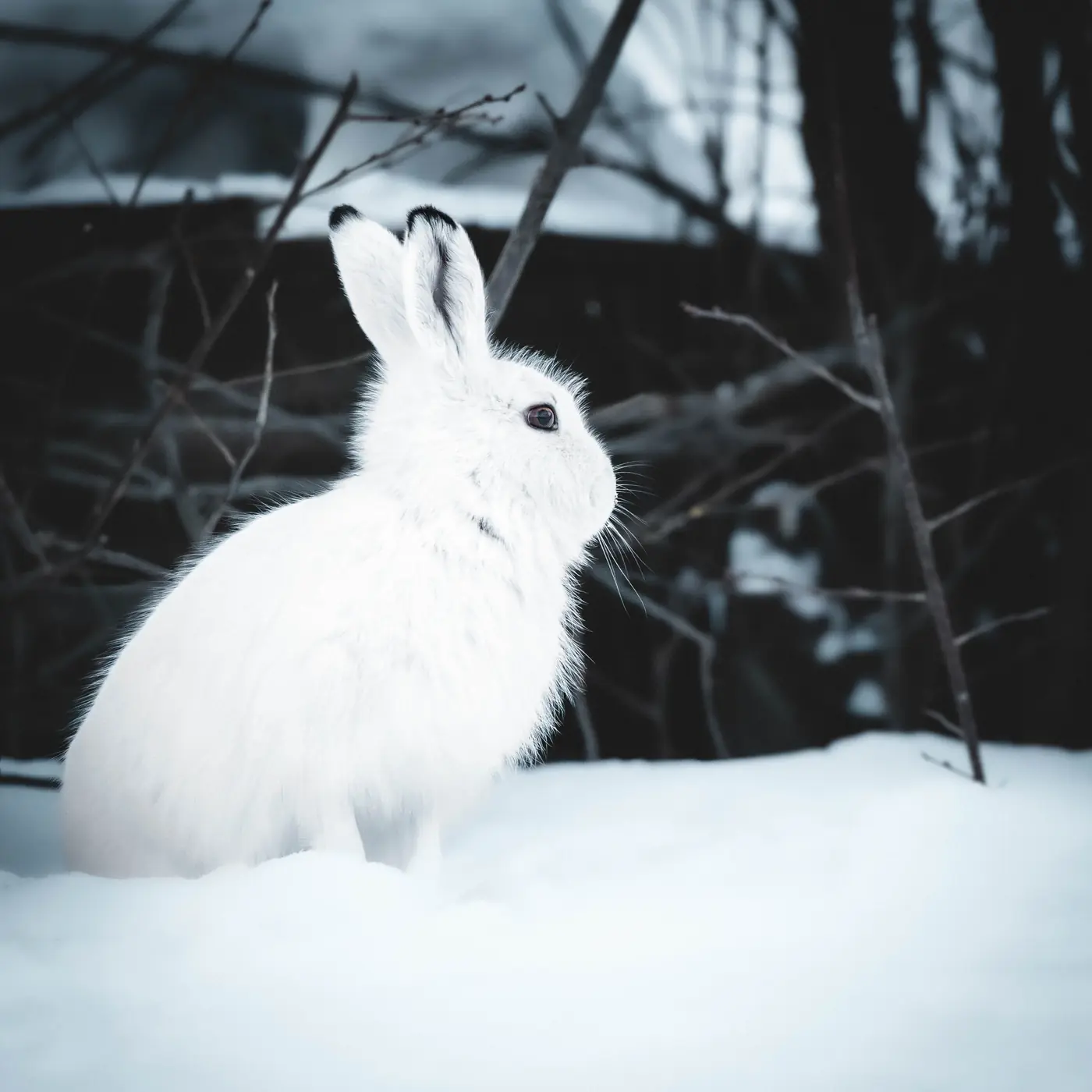
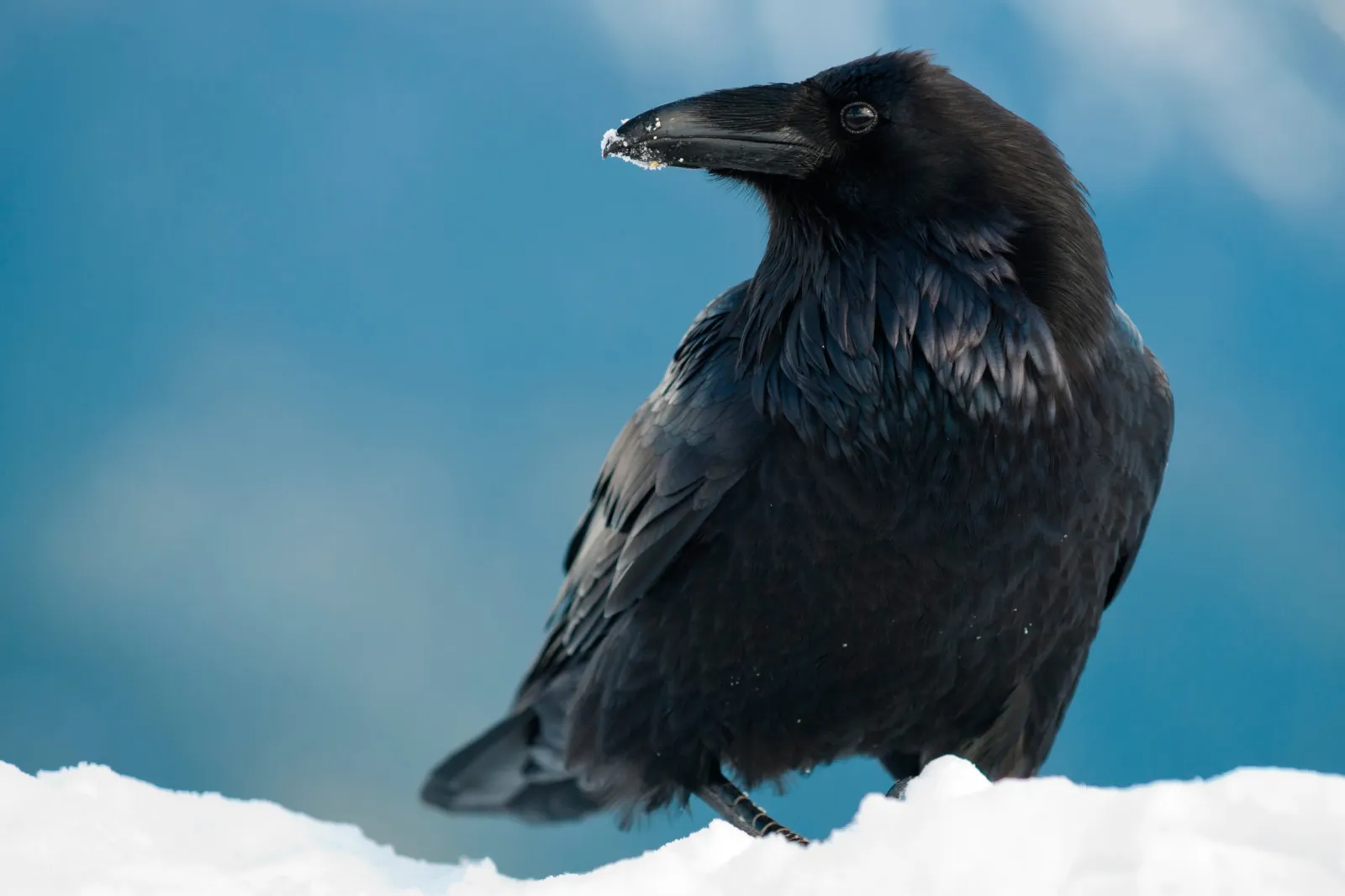
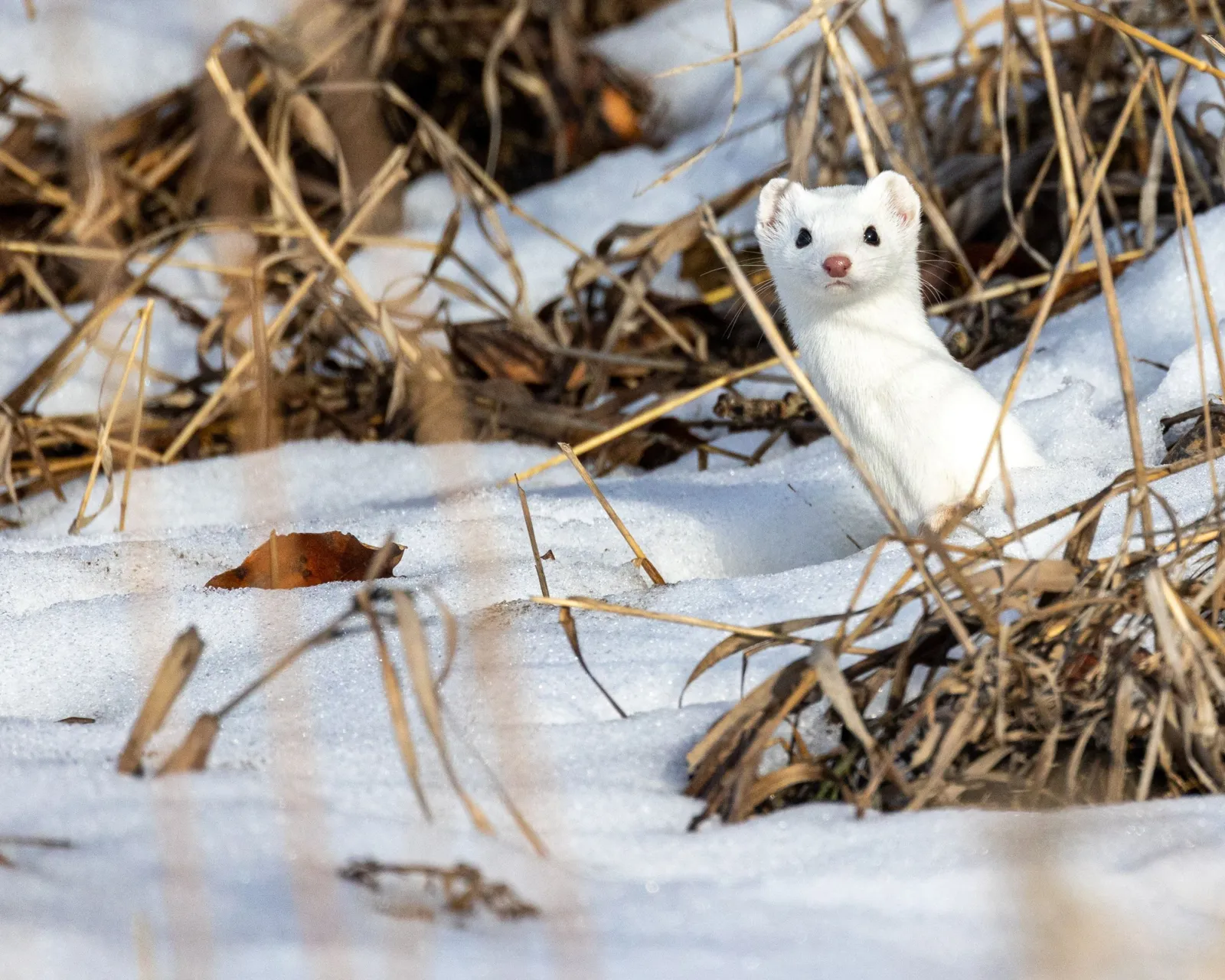
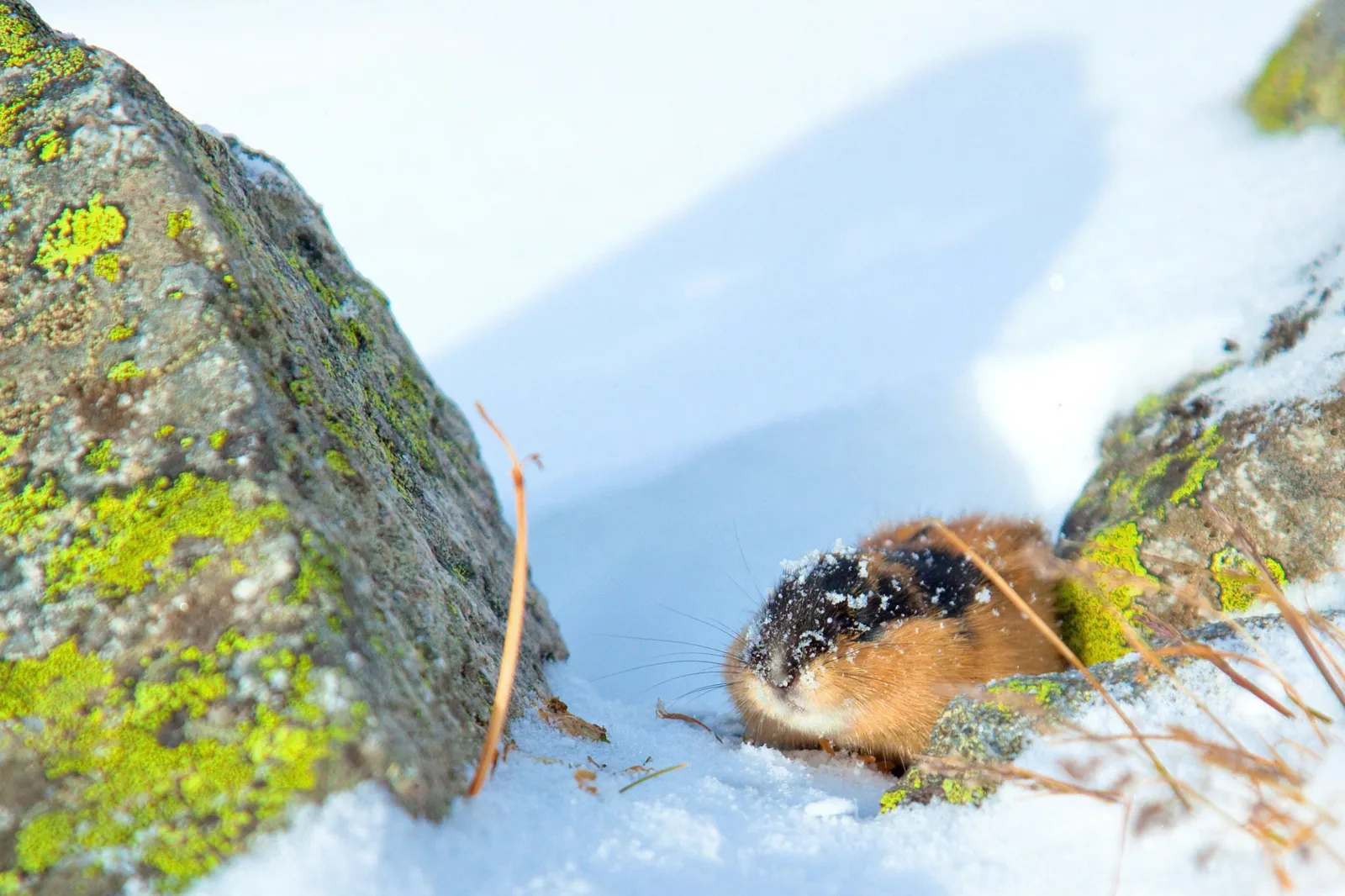
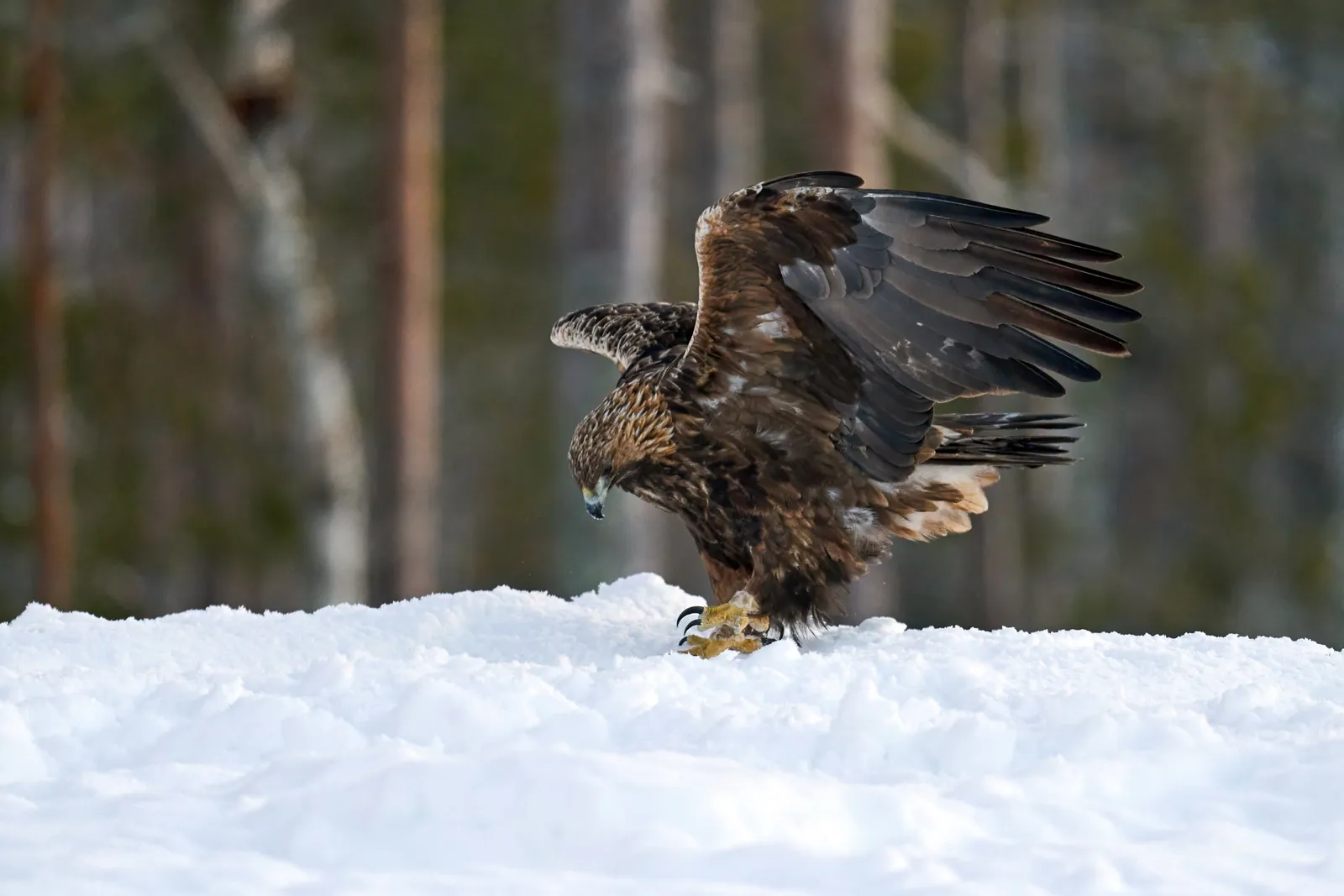
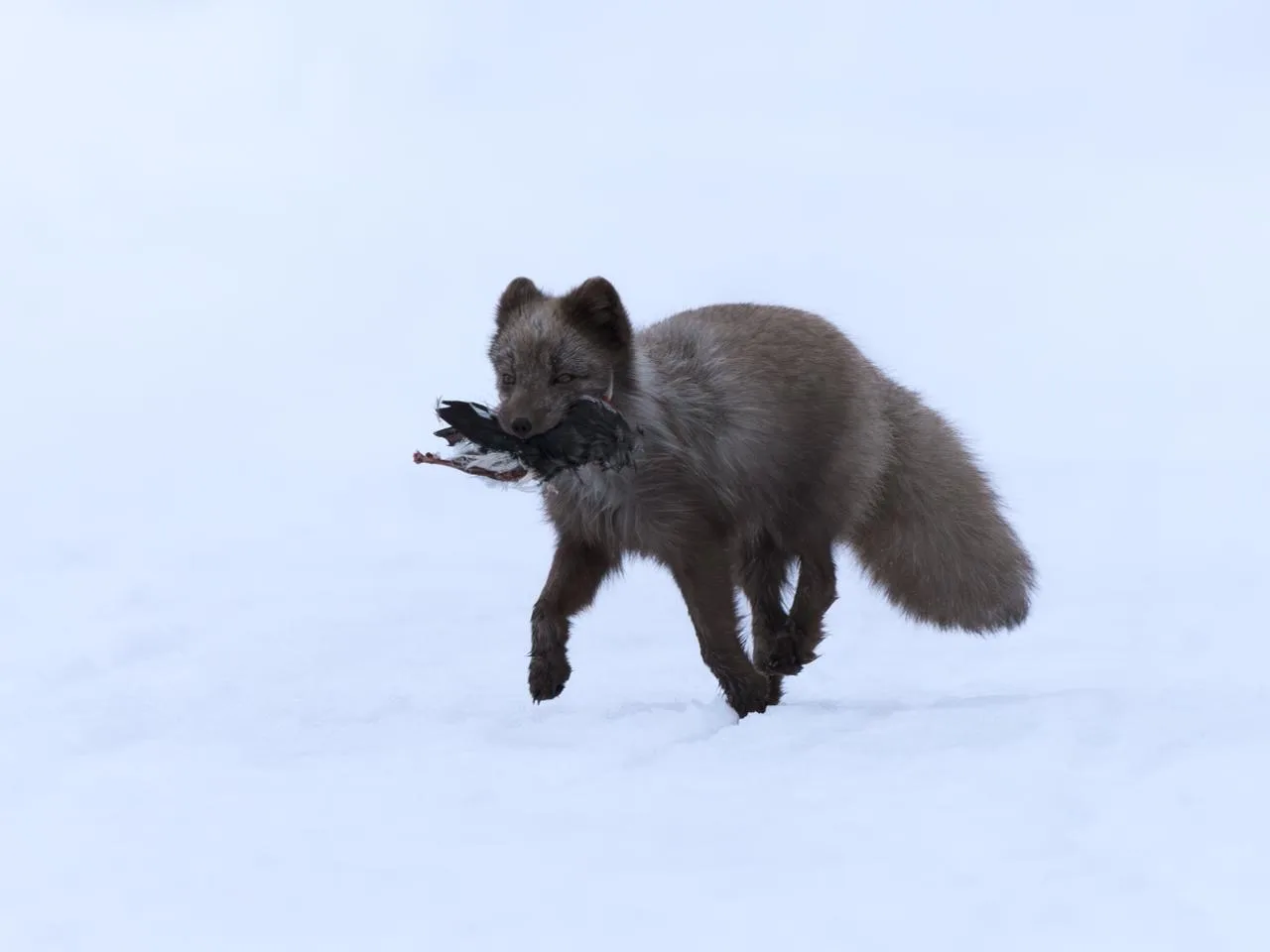
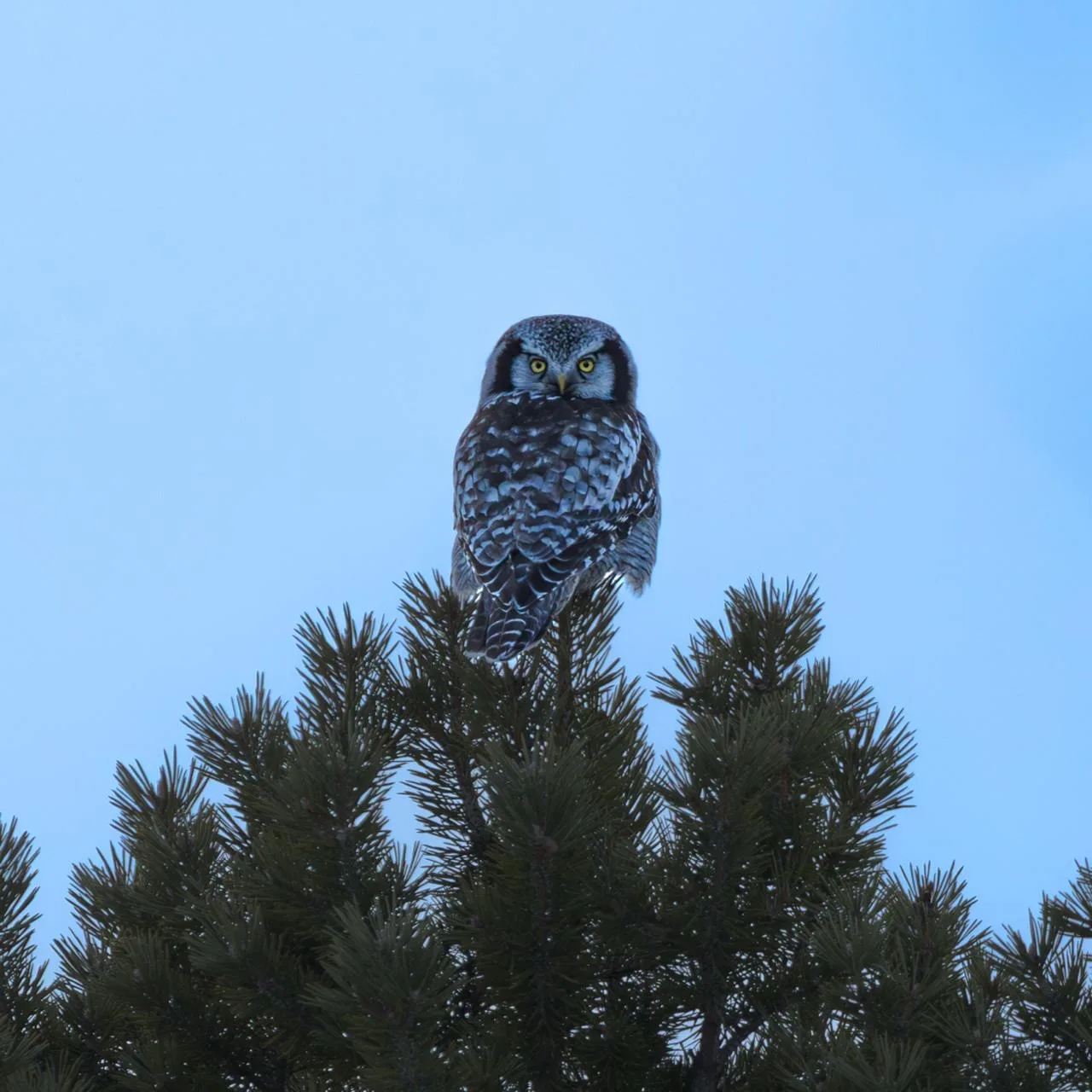
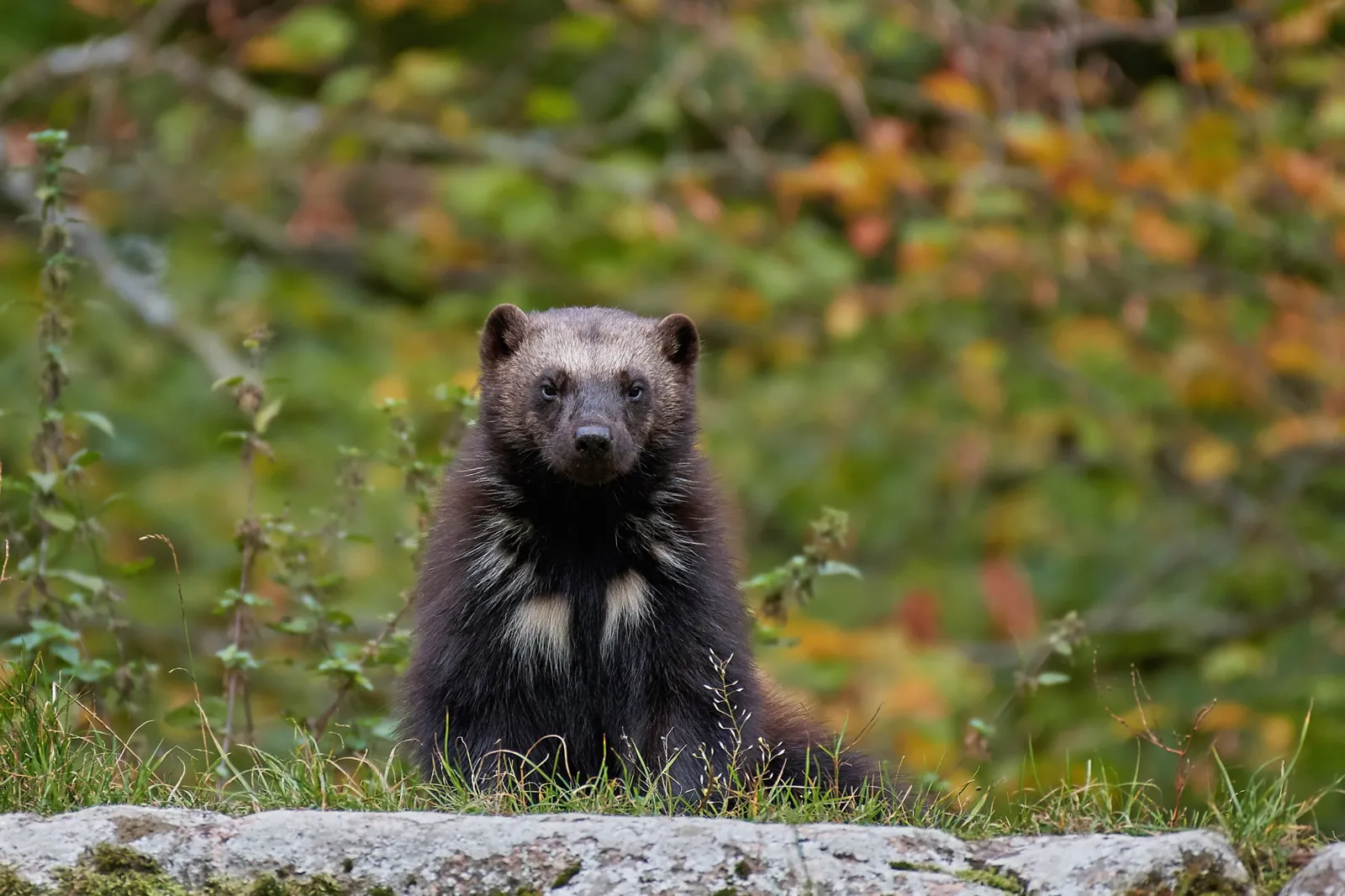
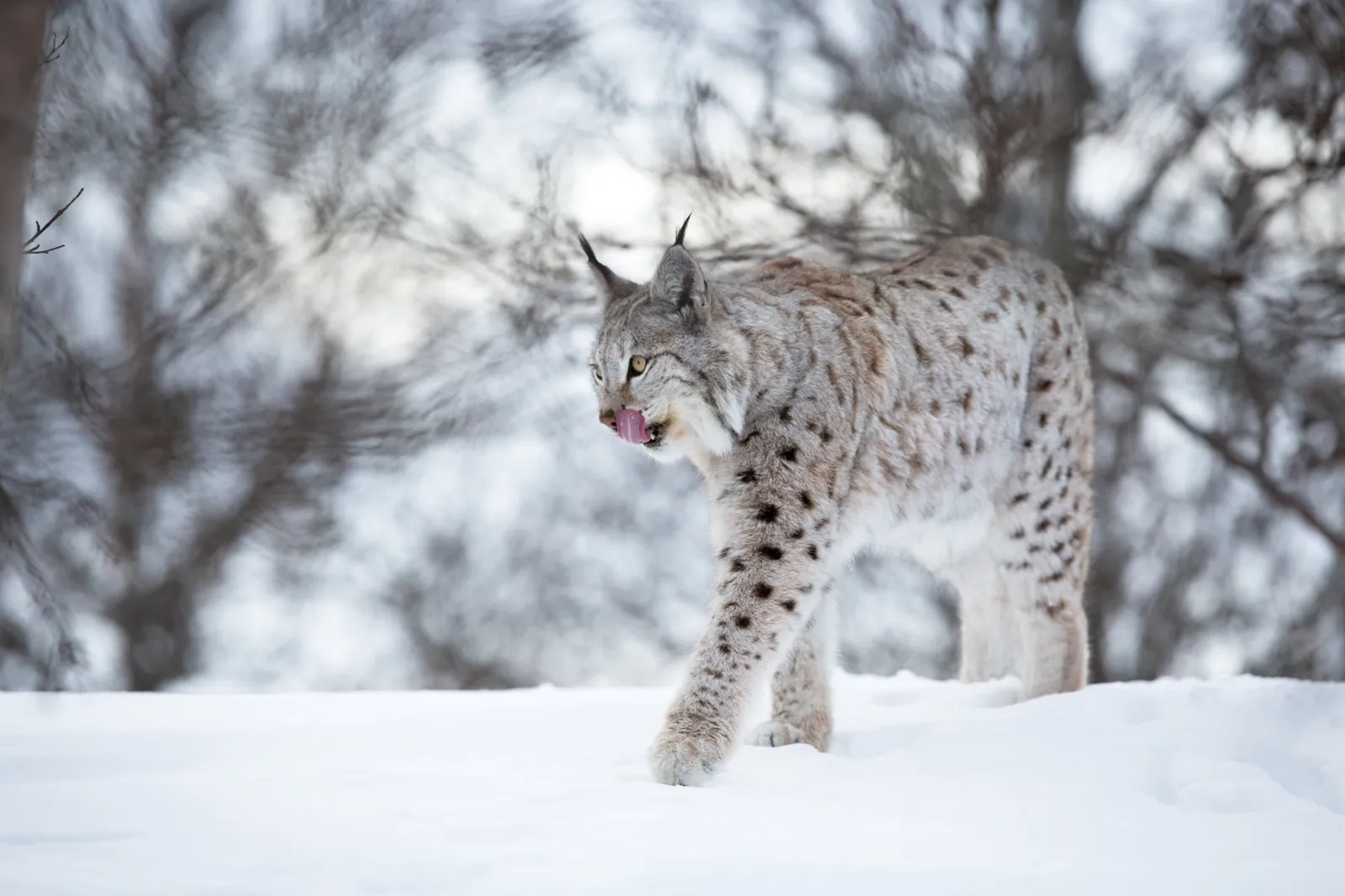
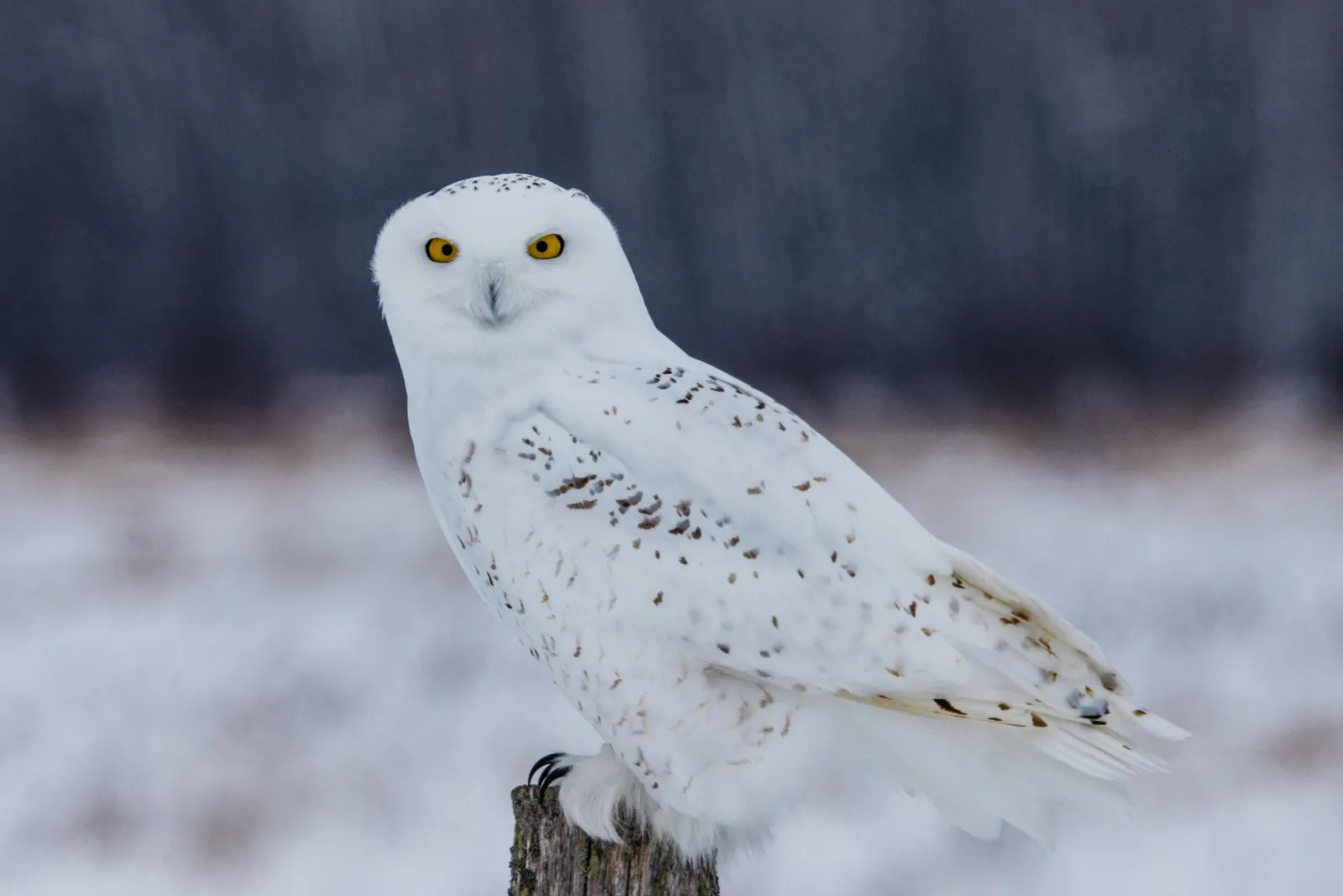
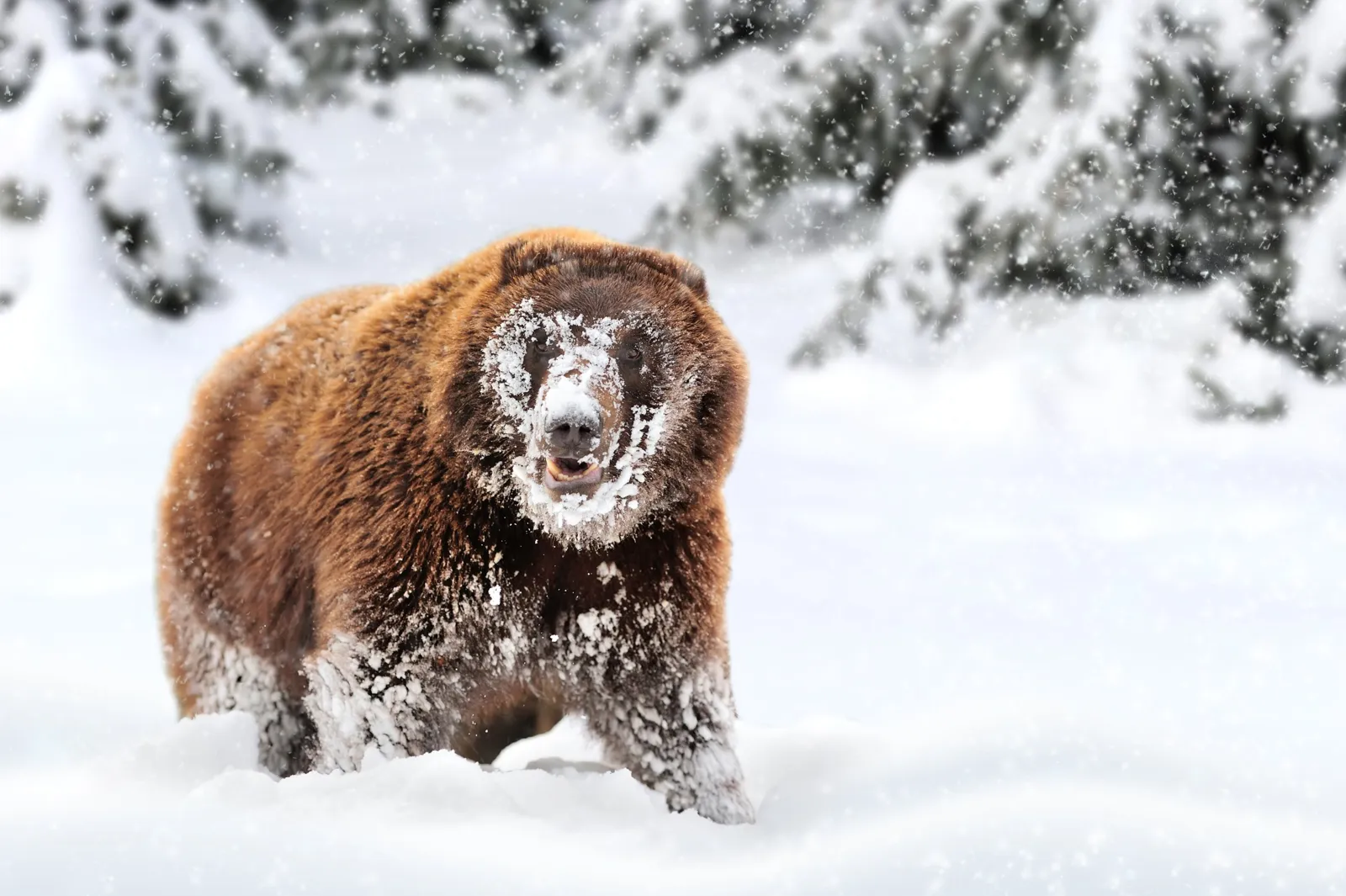
Who lives up there
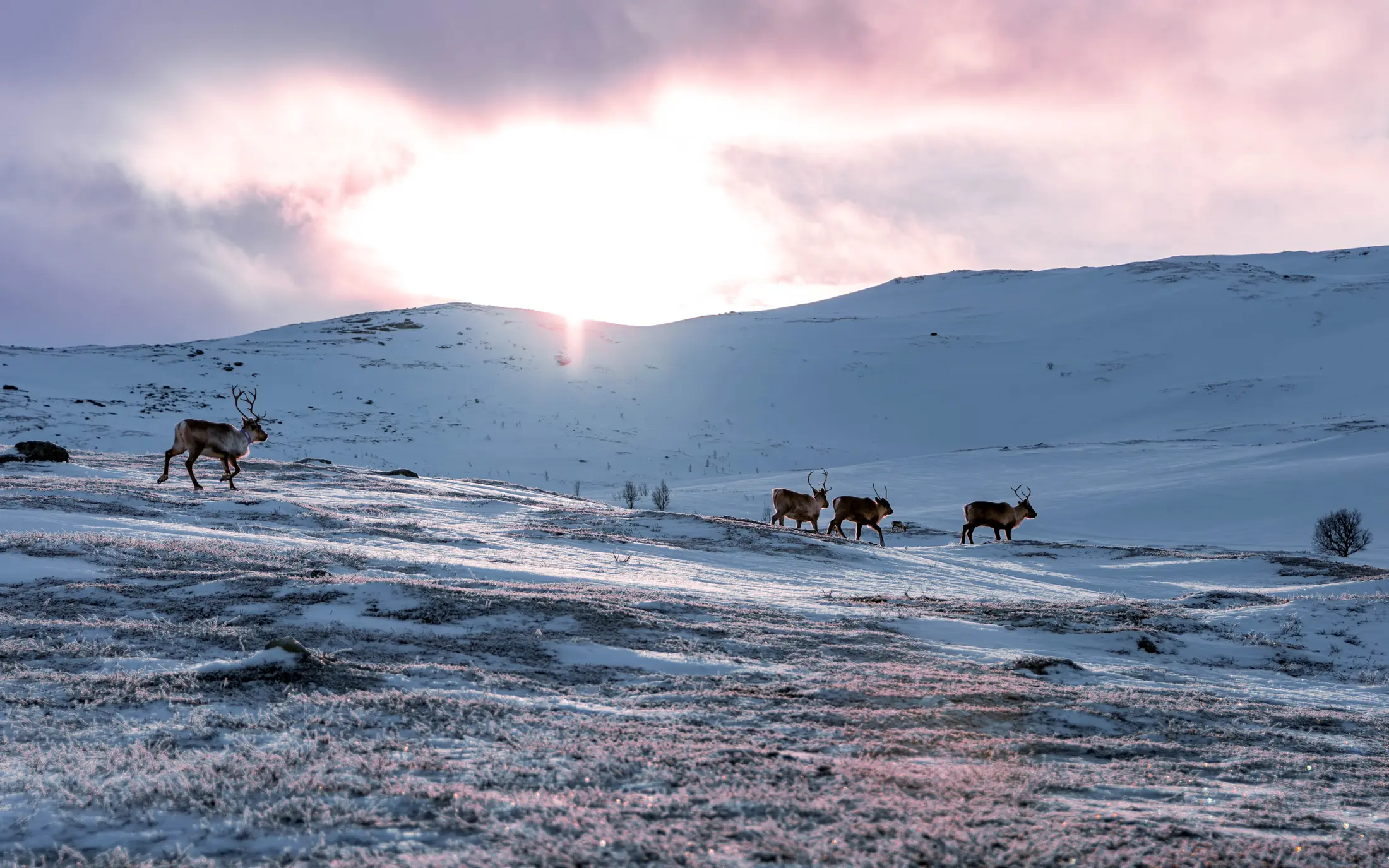
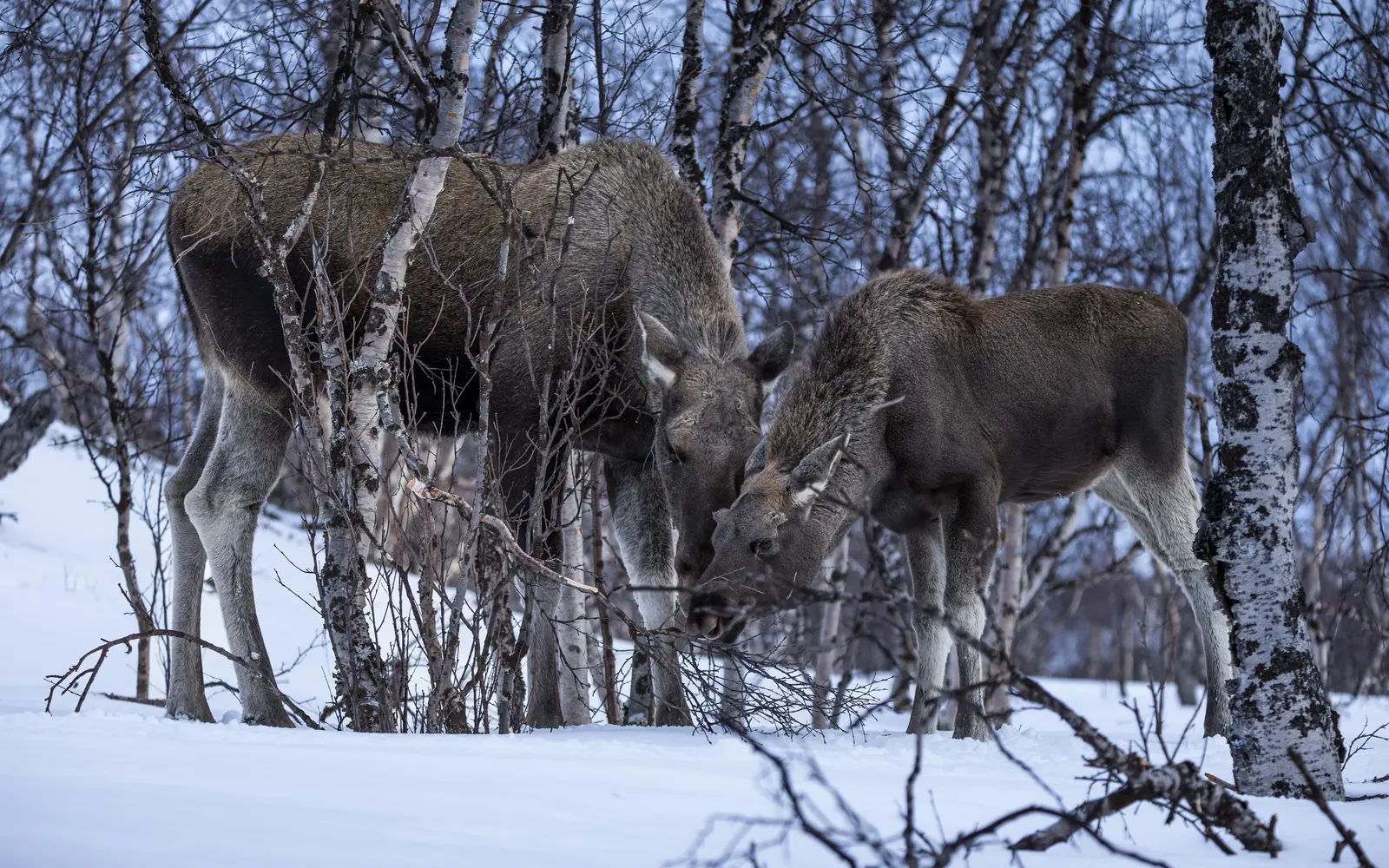
Nothing is promised. Some will show themselves, others will only leave tracks in the snow.
The weather
At the end of winter in the Sarek, a single week can go from clear skies to whiteout. Pick a kind of weather and see what it changes for us.
Tap a kind of weather to live it
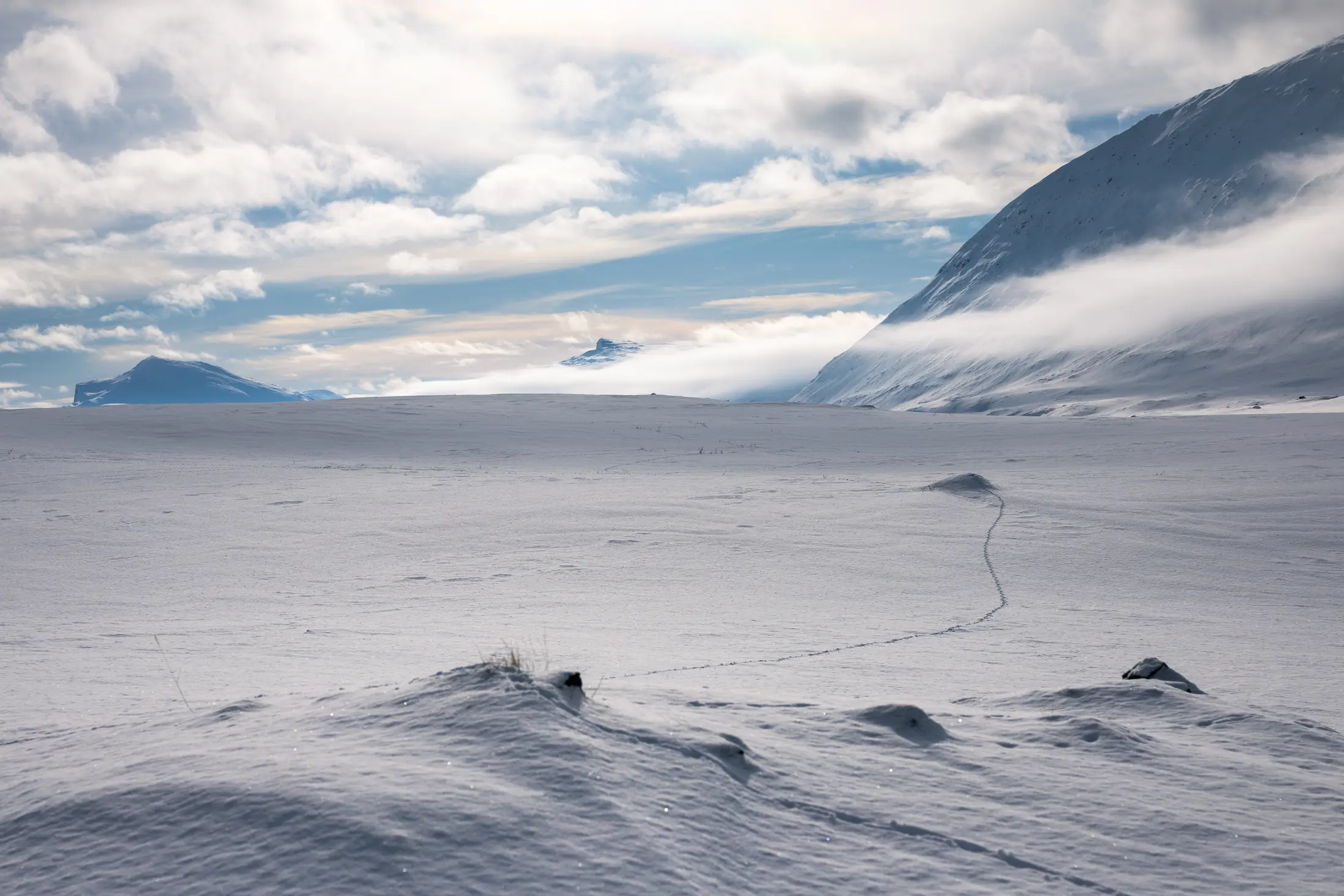
Pure sky, dry air, snow squeaking under the skis. With no clouds to hold the heat in, these are often the coldest nights.
For usSunglasses by day, every layer of down as soon as the sun drops behind the ridges.
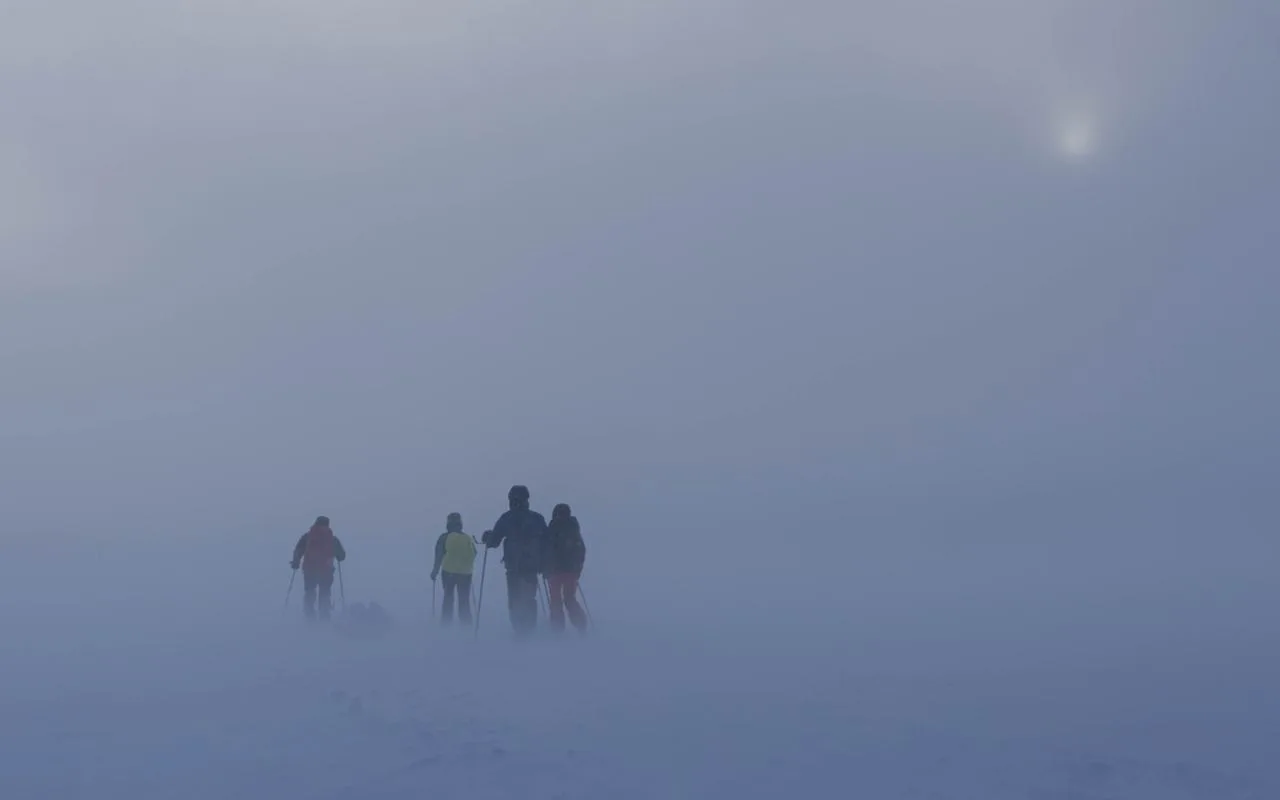
Above the tree line, nothing stops the wind. It lifts the snow along the ground; when it fills the air, sky and ground turn the same colour: that’s a whiteout. No more shadows, no more relief, no more horizon.
For usWe move by GPS and compass, close behind one another, or we wait for it to clear. In the evening, we build a snow wall to shelter the tent.
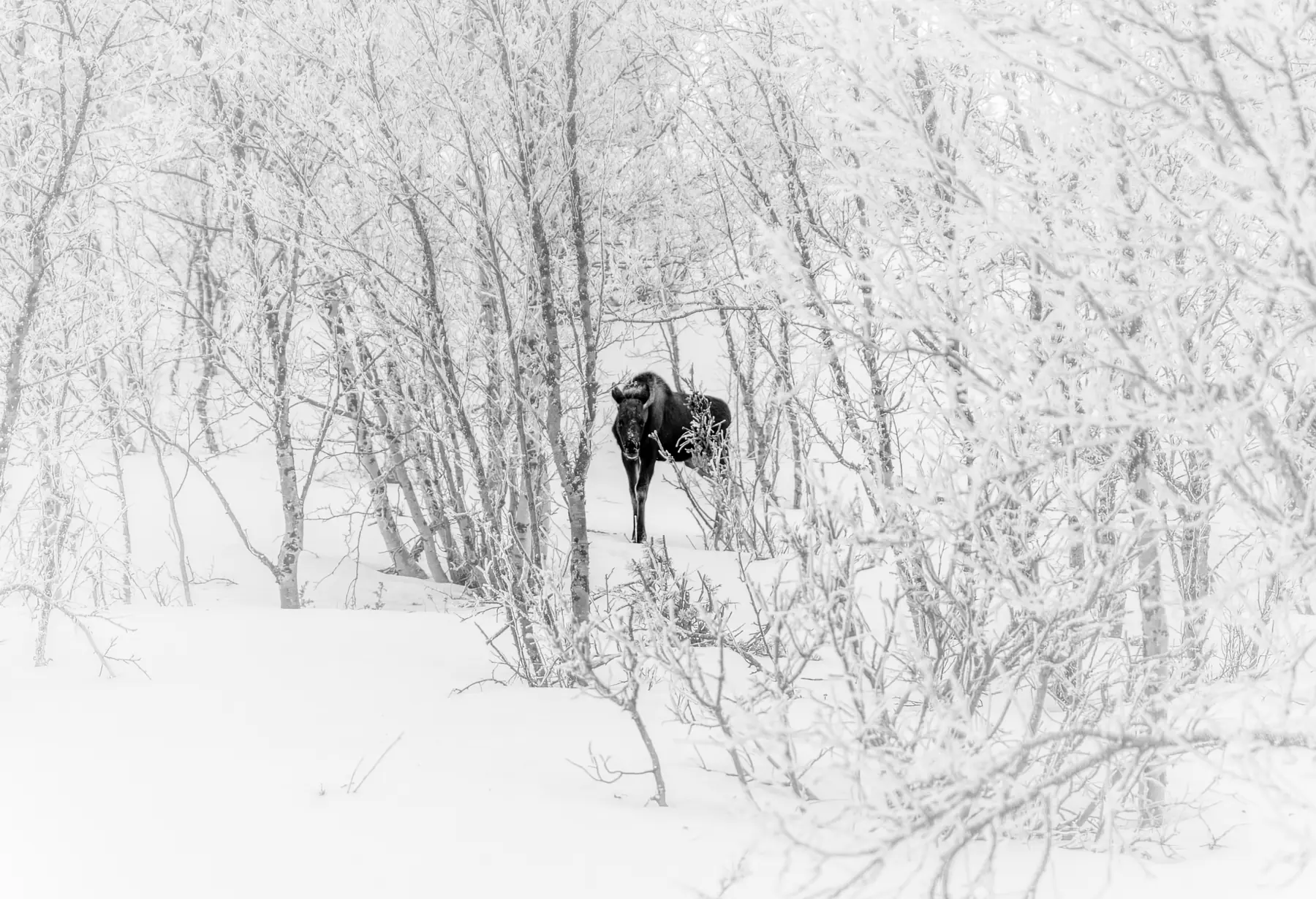
When the snow falls, the world goes quiet. In damp cold, every branch is covered in frost.
For usThe track is heavy: we take turns at the front to break it.
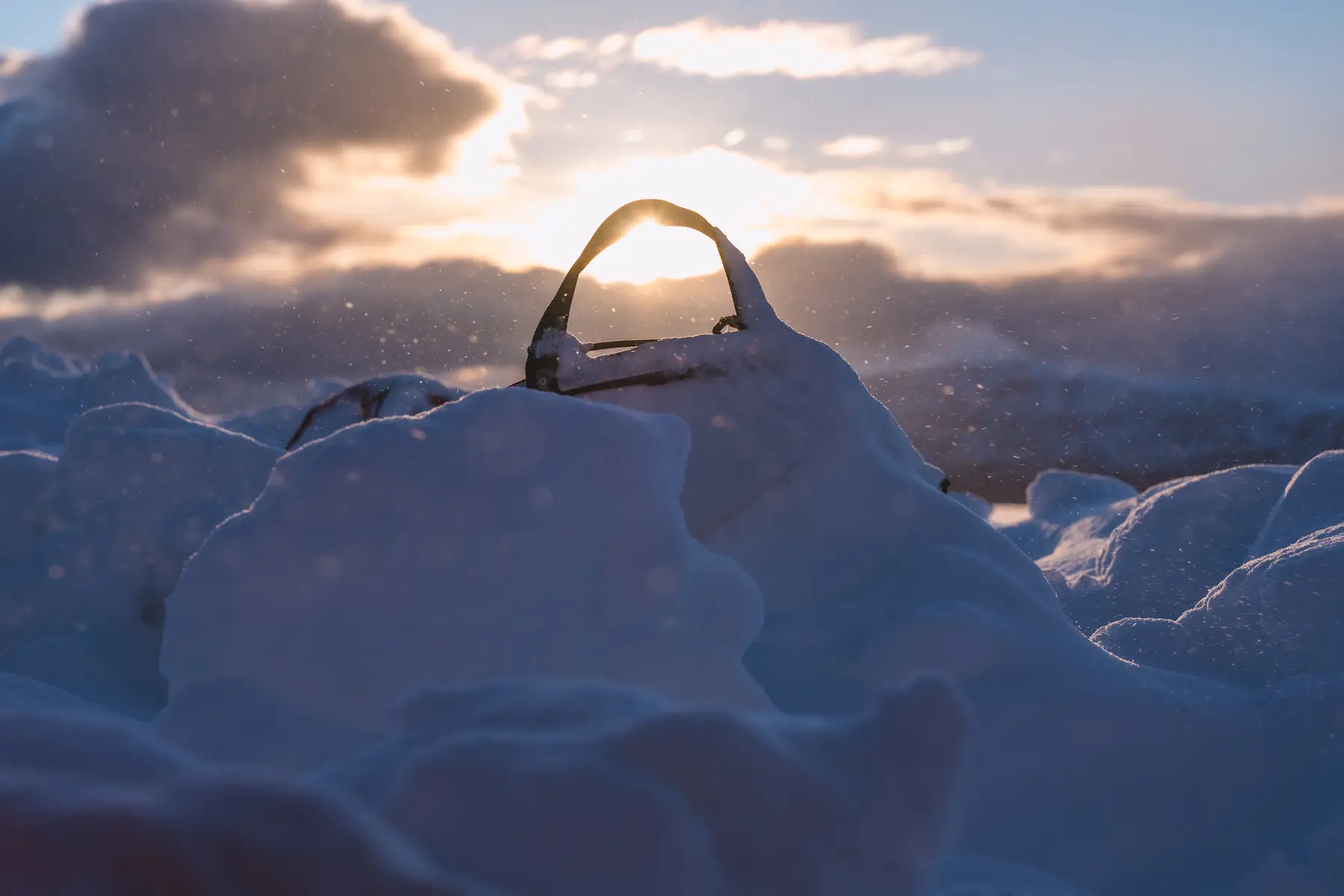
In March and April, the sun starts to warm things up. The snow gets heavy during the day, then refreezes overnight into a hard crust.
For usWe set off early on the frozen snow, and dry our things in the sun.
The wind carries away body heat: at the same temperature, the harder it blows, the colder you feel. Play with the two sliders.
Feels like
−22 °C
Moderate risk: frostbite and hypothermia possible after long exposure without protection.
For reference: in Kvikkjokk, at the edge of the park, March nights average around −13 °C and afternoons around 0 °C (SMHI, 2002–2022). Higher up, on the plateau, it is colder. The slider goes down to −50 °C: temperatures we should not normally meet. Calculation: wind chill index; risk levels from Environment Canada.
A late-winter day in the Sarek, from noon to a starry night. Scroll: the sun takes care of the rest.
At the equator, the sun rises and sets vertically: night falls all at once. The closer you get to the pole, the more its path tilts. At the Sarek’s latitude, it makes only about 23° with the horizon: the sun slides along the horizon instead of diving below it.
At the spring equinox, the sun peaks at noon around 23° above the horizon in the Sarek, against 40° in Rouen. Its light comes in at an angle all day: long shadows, sculpted relief, never the harsh light that falls from overhead.
Sunlight contains every colour. Passing through the air, blue bounces off molecules and scatters in all directions: that’s Rayleigh scattering, and it’s why the sky is blue. When the sun is low, its light travels through far more air. The blue has scattered away on the journey: the pinks and oranges remain.
Snow is white because it reflects almost all the light it receives, without keeping any colour. So it takes on the shade of whatever lights it: pink at sunset, blue in the shade. The whole landscape changes colour with the sky.
After sunset, the sky stays light as long as the sun is less than 6° below the horizon. Because it sinks at an angle, it takes much longer to cross those 6° up here: about half an hour in Rouen, an hour in the Sarek, nearly two hours in Svalbard.
Turn around, your back to the sunset. Just above the horizon, a dark blue band: the Earth’s shadow, cast onto the atmosphere. Above it, a pink fringe: air still lit by the sun. With such a slow twilight, you can watch it for a long time.
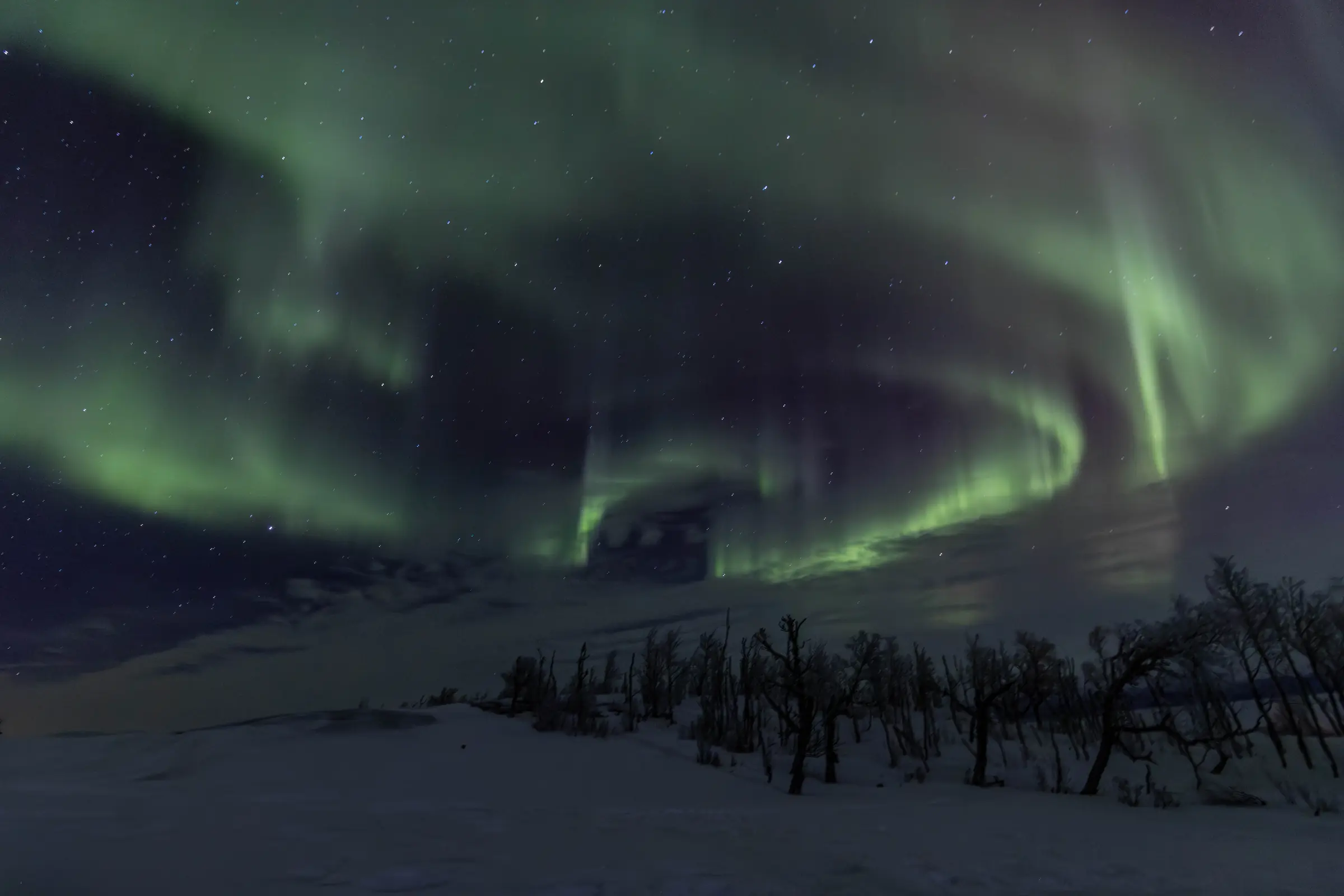
No town on the horizon: the sky fills with stars. And on some nights, the northern lights: particles from the sun, guided towards the poles by the Earth’s magnetic field, make the upper atmosphere glow.
The adventure
For the four artists, this is new ground. We are getting ready together, and we will tell you about the hard days too.
Skis, pulka, cold, tiredness, isolation. We learn as we go.
Moufid plans the route, leads the group and makes decisions based on the conditions.
Gear made for deep cold, tested before we leave.
If the weather stops us, if someone has doubts, we won’t hide it.
What guides us
● Next step: raising what we need to set off
Individuals
The journey to Lapland, the gear, the food, what we need to create in the cold. Every gift helps us bring back the beauty of the living world and share it, and we'll tell you everything along the way.
Companies and institutions
Link your brand to a project that cultivates wonder through art, and bring your teams along with us.